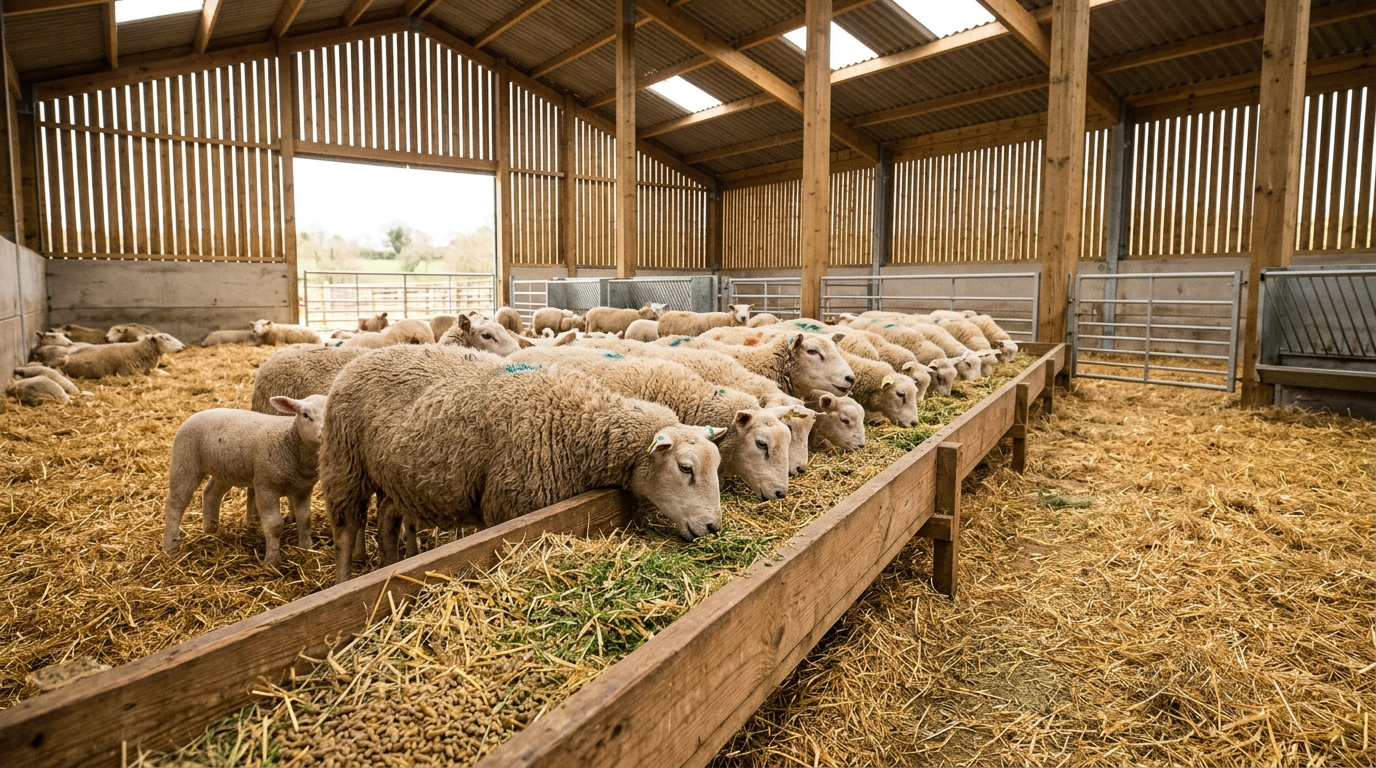
Mastering Total Mixed Rations (TMR) for commercial sheep farms: preventing urinary calculi, acidosis, and maximizing lamb growth rates through dry matter uniformity.
The Evolution of Sheep Nutrition: From Selective Grazing to Homogeneous TMR
Sheep possess split upper lips and agile tongues designed for extreme selective browsing. In conventional feeding where concentrate pellets and long hay are fed separately, dominant lambs gorge exclusively on grain while timid animals are left with poor forage, causing massive variation in pen growth and widespread metabolic disorders. Implementing a properly engineered Total Mixed Ration (TMR) is the single most effective technological intervention to standardize flock performance.
1. The Critical Calcium-to-Phosphorus (Ca:P) Ratio
In growing ram lambs fed grain-rich diets, excess dietary phosphorus combined with inadequate calcium causes the formation of insoluble magnesium ammonium phosphate crystals (struvite), leading to fatal urethral blockage (Urinary Calculi / Waterbelly). Nutritionists must formulate rations maintaining a strict Ca:P ratio between 2.0:1 and 2.5:1, reinforced with 0.5% ammonium chloride as an anionic urinary acidifier.
2. Copper Sensitivity: A Deadly Species Specificity
Unlike cattle which tolerate high copper levels, sheep have an extremely limited biliary copper excretion capacity. Dietary copper levels exceeding 20-25 ppm over several weeks lead to progressive hepatic copper accumulation until a sudden stress event triggers massive hemolytic crisis, jaundice, and rapid mortality. Dedicated formulation systems like Tawazon enforce hard upper bounds on total copper (typically under 10-12 ppm) and monitor molybdenum and sulfur antagonism.
Key TMR Physical Properties for Finishing Lambs:
- Forage Chop Length: 2.0 to 3.5 cm (short enough to prevent sorting, long enough to stimulate rumination).
- Mix Moisture Level: 15% - 20% using molasses or water binders to bind grain fines to roughage particles.
- Dietary Crude Protein: 16% - 18% in early post-weaning, stepping down to 13% - 14% at final finish.
3. Managing Enterotoxemia (Overeating Disease)
High levels of starch escaping to the abomasum and intestine trigger the rapid proliferation of Clostridium perfringens type D, releasing deadly epsilon neurotoxins. Precision TMR blunts starch spikes by ensuring that every single mouthful contains an identical proportion of fiber, protein, and energy, stabilizing the gut environment and dramatically reducing mortality.
4. Custom Sheep Optimization in Tawazon
Tawazon's sheep solver incorporates breed-specific growth curves (Awassi, Romanov, Dorper, Merinos) and allows formulators to lock precise Ca:P ratios, maximum copper thresholds, and Dry Matter intake limits, enabling sheep feedlots to hit target market weights with minimum cost and zero nutritional casualties.