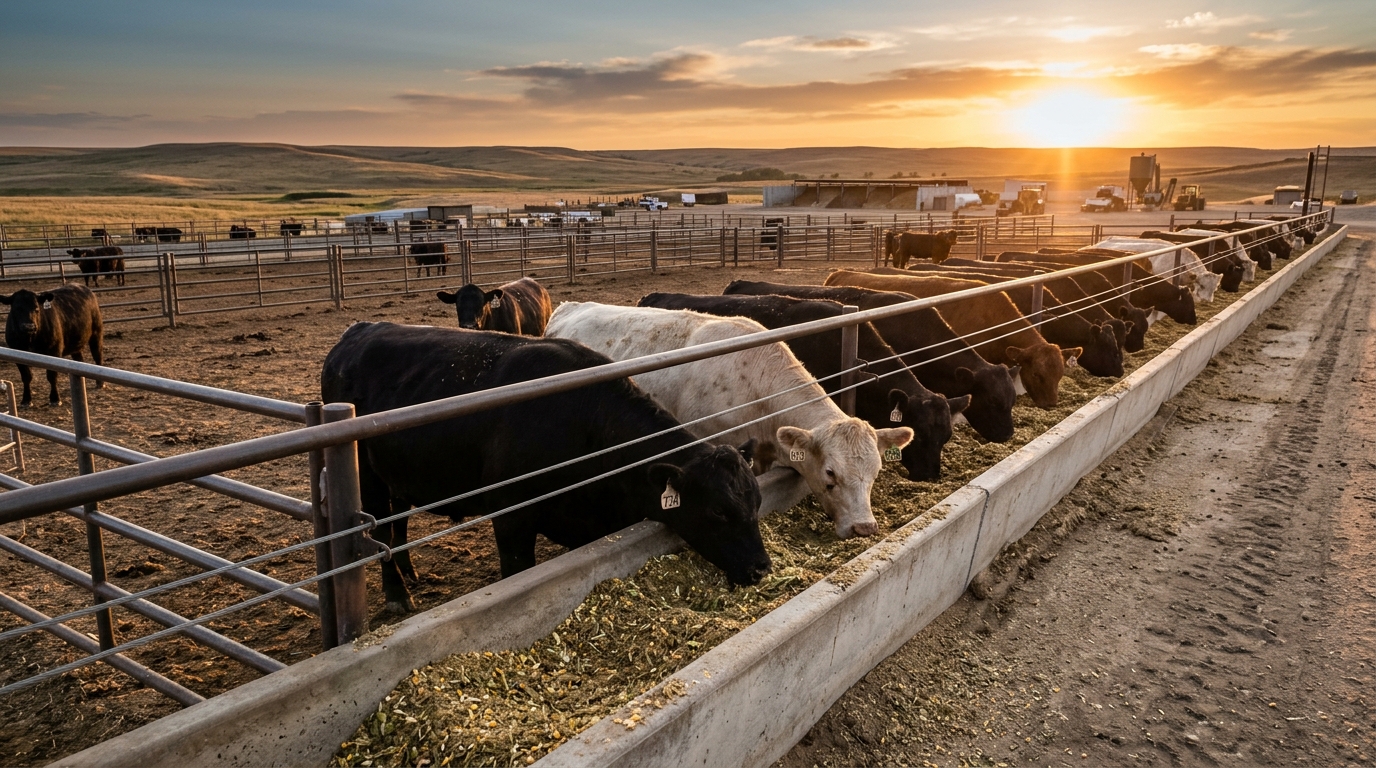
Discover how to formulate high-density beef rations achieving daily gains over 1.6 kg/day while slashing feed conversion ratios through precision Net Energy for Gain (NEg) and bypass amino acids.
The Feedlot Profit Formula: Turning Dry Matter into Muscle
In intensive beef cattle finishing, feed costs represent over 70% of total operating expenses. The difference between an enterprise operating at a Feed Conversion Ratio (FCR) of 6.2 versus 7.8 translates to thousands of dollars per pen. To achieve rapid Average Daily Gain (ADG) exceeding 1.6 - 1.8 kg/day, nutritionists must master the California Net Energy System—differentiating sharply between Net Energy for Maintenance (NEm) and Net Energy for Gain (NEg).
1. The Energy Hierarchy: Maintenance Tax vs. Gain Dividend
A finishing steer must satisfy its maintenance requirement before a single megacalorie can be partitioned toward tissue deposition. Low-energy rations consume the majority of daily Dry Matter Intake (DMI) simply keeping the animal alive. By concentrating the NEg density to 1.35 - 1.45 Mcal/kg DM in the finishing phase, each additional kilogram of intake directly fuels skeletal muscle hypertrophy and rapid fat marbling.
2. Beyond Crude Protein: The Power of Bypass Protein (RUP)
Crude Protein (CP) alone is a deceptive metric in growing cattle. Microorganisms in the rumen degrade Rumen Degradable Protein (RDP) into ammonia. However, in rapidly growing young bulls and steers (under 400 kg), microbial crude protein synthesis cannot satisfy the metabolic amino acid requirements for peak lean growth. Incorporating quality sources of Rumen Undegradable Protein (RUP)—such as treated soybean meal, corn gluten meal, or DDGS—delivers essential bypass lysine and methionine directly to the abomasum and small intestine.
Feedlot Ration Transition Protocols (Step-Up Phases):
- Starter / Receiving Diet: 55% - 60% Roughage, high digestible fiber to restore gut motility.
- Intermediate Grower Diet: 35% - 40% Roughage, escalating grain concentrates over 14-21 days.
- Finishing Finisher Diet: 10% - 15% Roughage, 85% - 90% High-energy concentrate mix.
3. Managing Bunk Management and Acidosis in Ultra-High Concentrate Diets
Feeding 85%+ concentrate rations requires surgical precision in bunk management. Sub-clinical acidosis causes inconsistent daily intake cycles: cattle gorge on grain, experience low ruminal pH, back off feed for two days, and gorge again. Utilizing ionophores (such as monensin) along with precise grain particle size and moisture conditioning levels consumption peaks and stabilizes rumen ecology.
4. Least-Cost Feedlot Optimization with Tawazon
With grain commodity markets fluctuating wildly, feedlots cannot afford static recipe sheets. Tawazon's ruminant linear solver evaluates shadow prices across corn, barley, sorghum, hominy feed, and agro-industrial by-products, instantly re-optimizing the ration to deliver required NEg and RUP constraints at the lowest feasible cost per ton.