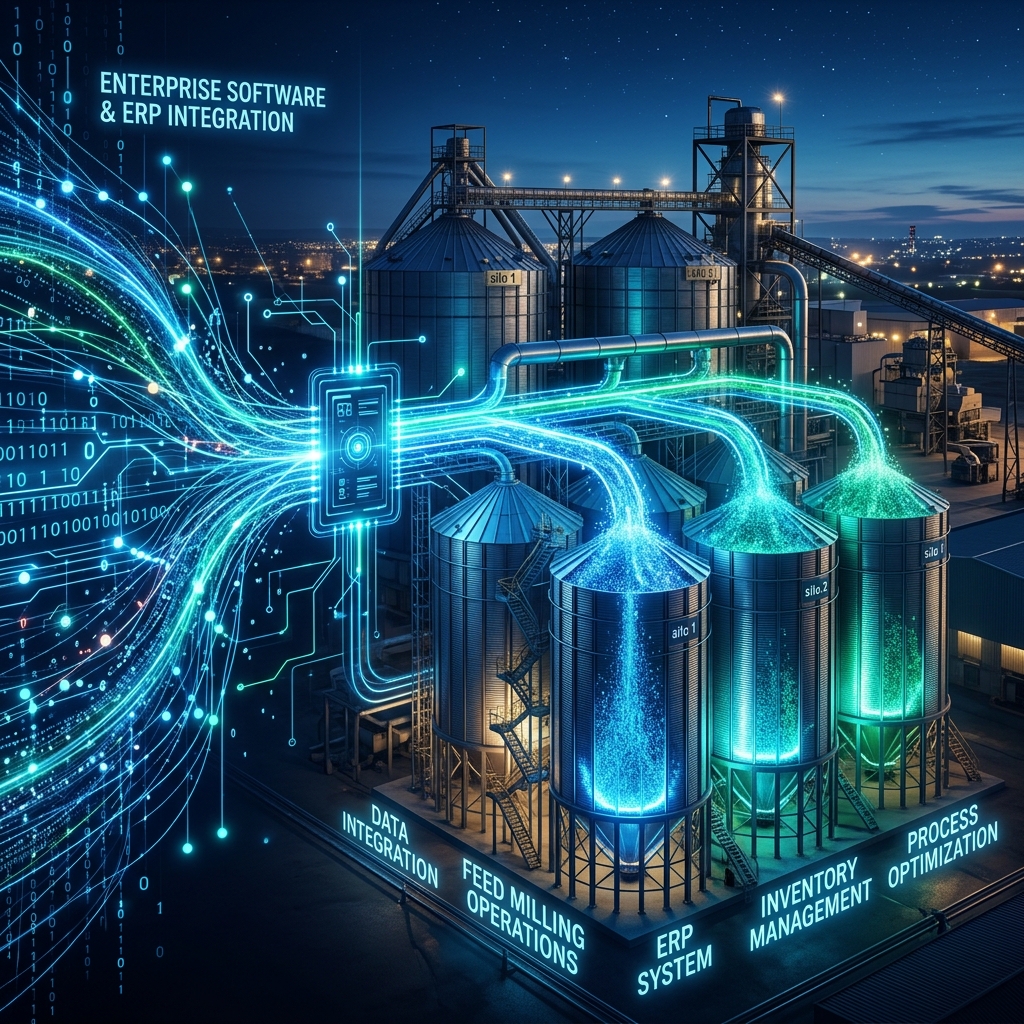
Moving from isolated spreadsheets to fully integrated cloud-based systems that sync with ERPs and automated batching hardware.
The End of Data Silos
In many legacy feed mills, formulation exists in a vacuum. A nutritionist creates a formula in standalone software, exports it as a CSV, and hands it to a plant manager who manually uploads it into the automated batching system. This fragmented workflow is slow, error-prone, and disconnected from real-time inventory.
Seamless Enterprise Integration
Modern formulation engines are built with API-first architectures. This allows them to integrate directly with Enterprise Resource Planning (ERP) systems like SAP or Microsoft Dynamics. When the procurement team updates raw material prices or logs a new shipment in the ERP, the formulation engine instantly recalculates the matrix to maintain the least-cost optimum.
Furthermore, approved formulas can be pushed directly to PLC-based plant automation systems (like Repete or WEM), eliminating human data-entry errors and ensuring that the physical mix matches the theoretical formula with 99.9% accuracy.